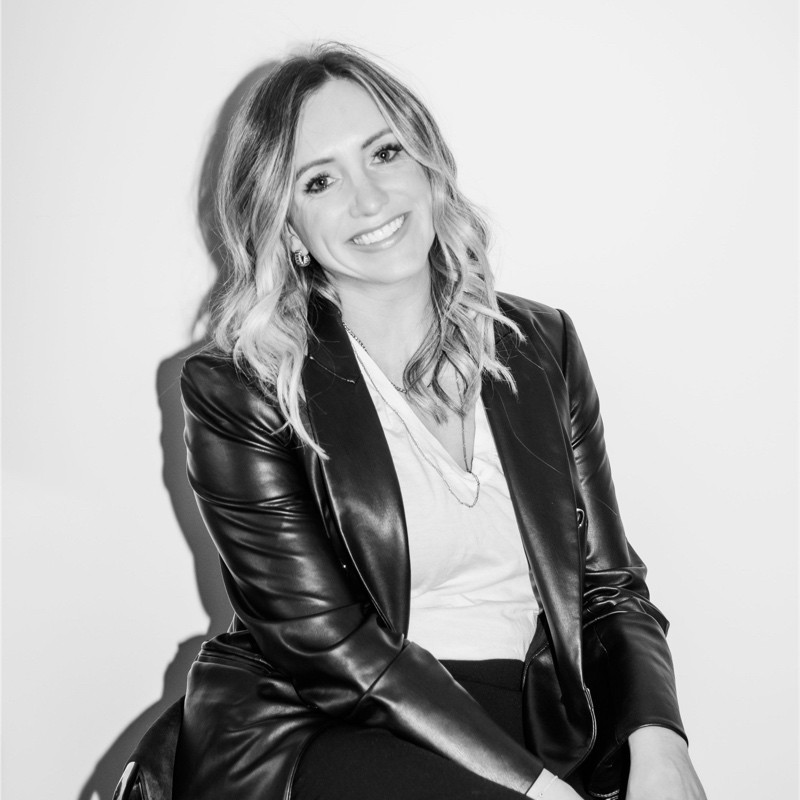
This interview explores open source strategies and governance for artificial intelligence with a focus on agentic AI at the MCP Dev Summit 2026 in Times Square. Manik Surtani of Block discusses the Goose project, the formation of the Agentic AI Foundation and how open source communities shape interoperable standards for agentic AI. Surtani, a veteran open source practitioner and co-founder of the Agentic AI Foundation, explains how Goose evolves from an internal skunkworks to a community-driven framework and they emphasize transparent governance, open protocols and community-led standards to prevent vendor lock-in.
theCUBE Research hosts the conversation. Gemma Allen of theCUBE Research guides questions about governance, interoperability, open protocols and the role of foundations and communities in accelerating development across the agentic AI ecosystem. Allen highlights the need for broad participation so that guardrails and standards keep pace with rapid innovation in AI and maintain user control and portability. Surtani notes that working groups within the Agentic AI Foundation focus on trust, identity and security.
Forgot Password
Almost there!
We just sent you a verification email. Please verify your account to gain access to
MCP Dev Summit - Presented by the Agentic AI Foundation. If you don’t think you received an email check your
spam folder.
In order to sign in, enter the email address you used to registered for the event. Once completed, you will receive an email with a verification link. Open the link to automatically sign into the site.
Register for MCP Dev Summit NA 2026
Please fill out the information below. You will receive an email with a verification link confirming your registration. Click the link to automatically sign into the site.
You’re almost there!
We just sent you a verification email. Please click the verification button in the email. Once your email address is verified, you will have full access to all event content for MCP Dev Summit NA 2026.
I want my badge and interests to be visible to all attendees.
Checking this box will display your presense on the attendees list, view your profile and allow other attendees to contact you via 1-1 chat. Read the Privacy Policy. At any time, you can choose to disable this preference.
Select your Interests!
add
Upload your photo
Uploading..
OR
Connect via Twitter
Connect via Linkedin
EDIT PASSWORD
Share
Forgot Password
Almost there!
We just sent you a verification email. Please verify your account to gain access to
MCP Dev Summit - Presented by the Agentic AI Foundation. If you don’t think you received an email check your
spam folder.
In order to sign in, enter the email address you used to registered for the event. Once completed, you will receive an email with a verification link. Open the link to automatically sign into the site.
Sign in to gain access to MCP Dev Summit - Presented by the Agentic AI Foundation
Please sign in with LinkedIn to continue to MCP Dev Summit - Presented by the Agentic AI Foundation. Signing in with LinkedIn ensures a professional environment.
In this interview from the MCP Dev Summit 2026, Manik Surtani, head of open source at Block and co-founder of the Agentic AI Foundation, joins theCUBE + NYSE Wired's Gemma Allen to discuss the founding of the Agentic AI Foundation and why open protocols are essential to building AI that remains transparent, fair and accessible. Surtani traces the foundation's origins to Goose, Block's open source agentic framework that began as an internal skunkworks project in late 2024 before being released to the community in January 2025 — quickly expanding in directions ...Read more
exploreKeep Exploring
What is the origin story of Goose and how did it come to be open‑sourced and widely adopted by the community?add
How did Block's open-source work (for example Goose) lead to the creation of the Agentic AI Foundation, and why did Block decide to partner with Anthropic to form a single foundation?add
How should security and governance guardrails for agentic AI be established and managed (especially in light of incidents like OpenClaw), and what is the Agentic AI Foundation’s ongoing structure, activities, and cadence for addressing those issues?add
>> Welcome back to theCUBE and NYSC Wired. We're here at the MCP Dev Summit in Times Square, Manhattan. And joining me now is the head of open source of Block, and the co-founder of the Agentic AI Foundation, Manik Surtani. Welcome, Manik.>> Hi, Gemma.>> So, we had a short conversation there off camera about just how crazy and exciting, and, I guess, confusing this moment is in tech, right?>> Yeah.>> You have been at the center of this entire open source world for quite a while. Maybe start with your work at AAIF, and talk to us a little bit about how that came to be, and I guess, really the moment you've arrived at here today.>> It's got a great origin story, like I said. It all started with Goose, actually. So Goose is the open source agentic framework, I guess, that Block created. We created it, oh God, it was late 2024. It's a skunkworks project. Internally, you were playing around with. It wasn't open source yet at the time, and we saw it was gaining some traction. We're using it to write code, a little bit like the way you'd use Claude Code today. And we thought, "This is cool. People are finding it useful." It was all based on MCP, and plugins, and extensions. They said, "We should open-sourced this, see what the community will do with it."
And they did. In January 2025, we open-sourced it, released it to the community. It took off like wildfire.>> Wow.>> Loads of people started downloading it, and using it, adding to it, extending it in ways we couldn't predict. And it was great. Even some of the things we do with Goose today internally, like we use it to work with Figma for designs, all of that stuff came from the community. We use it to work with Google Drive for calendars and docs. That stuff came from the community as well. So, some->> The name Goose, am I correct?>> Yeah.>> That it's based on the Top Gun movie, is this correct or that's a rumor?>> Yes, that's the rumors. Yes, that is a rumor that I will confirm that rumor that is correct. Also, because Bradley Axen, the person who created Goose, has the same mustache as well. But anyway.>> He was my favorite character, I got to tell you.>> Yeah, got you.>> But in terms of financial services broadly, especially as it relates to payments and regulation and integrations, and some of the ways in which that industry has remained siloed, somewhat intentionally, you could say, right? There has been mass challenges. And I know I've heard you guys speak a lot about the future needs to be more integrated.>> Yes.>> How do we actually make that happen, though? How do we overcome some of those legacy challenges that exist in highly regulated worlds, like banking?>> Block's very good at things like that. They're very good at experimentation and pushing boundaries. And I'll just talk about open source, for example, as one way we do that. Open source is deeply woven into Block's DNA, and we would think about the developer community first before anything else. We open-source a lot of our work, a lot of our work's built on open source. And like I said, Goose is an example of how that started, and how that led to the Agentic AI Foundation. At some point, we realized Goose is going great. How do we expand its reach even further in the community? And the foundation's the right way to do that. And I got wind of the fact that David Soria Parra at Anthropic was thinking of the same thing with MCP. I reached out, we had a conversation. We realized we were very aligned in how we were thinking about what we wanted from a foundation. And we said, "Instead of two separate foundations, let's just do one together." We had join hands, and that's the start of it.>> And you were in the middle of two very active rivals, right, at this foundation?>> Yeah.>> We have Anthropic on one side, OpenAI on the other. We know that these guys are definitely going to battle. Are you like Switzerland in this debacle? Tell me about the collegiality of it, because all we see in the headlines is Sam versus Dario. What happens, from a tech perspective, behind the scenes?>> Right. It's very different, actually. It's surprisingly very different. Nick Cooper from OpenAI, who's on the governing board and one of the founding members of the foundation, is also a well-known figure in the MCP community. So, he and David have known each other for a long time. They've worked on the MCP spec together and things like that. So already, there was a lot of collaboration even before the foundation. So it was really easy to, actually, for us all to work together, because we already kind of trusted each other. So, that actually made things really easy.>> And I guess, in this community, like community connection and collaboration, it's probably more important than ever before.>> That's right. That's right.>> So->> And with all the powers of open source, it all boils down to the actual work being done and how people collaborate.>> 100%. Let's stay on open source for a second. So, we were joking earlier that if you look at the back of the today, the wifi password is in the next 1991, right?>> Yes.>> That is a long time ago. In the world of tech, it feels like it could be centuries ago->> That's right.... >> if you think about what's happened in that space of time. Especially from the perspective of open source, in 1991, no one knew what that really meant, right?>> No.>> We're now in a moment, I think you could argue, where what it means too has shifted somewhat. Because if we think about the premise of open source within tech, especially commercially, a lot of companies develop these strategies because it also gave them loyalty, right?>> Yes.>> It gave you a certain level of retention. It helped keep people on your stack.>> It's good for your engineering brand.>> A hundred percent. But in this moment we're in where we hear so much about vibe coding, what it means to be a builder and a breaker versus 10 years ago. Whether or not you even need an engineering degree anymore, who knows?>> Right.>> What are your thoughts on where we're at right now from an open source perspective?>> Yeah, that's really interesting. I think open source is going to change a lot, and how it changes specifically, I don't know yet. But I expect that as the cost of code drops, and becomes easier and cheaper, and can generate whatever you need, is open source still relevant? I would say it still is to some degree, at least from a code perspective. But of course, open source is much more than just code. So, that doesn't change. Open protocols are still really important. Open standards are still really important. Open communities are still really important. So, I think all of that still lives on. If anything, they become more important. If you're going to vibe-code things and expect everything to work together, you need to have open protocols and open standards so they will fit together, otherwise they won't.>> I know one of the key themes for the Linux Foundation and for this community broadly is around security and governance, right?>> Yes.>> At a time when it seems, again, like there's a lot of skepticism as to what's being built... I mean, OpenClaw is a perfect example of that. How do you think that these guardrails will continue to exist and be managed? What are your thoughts on what's really needed to meet the moment?>> Oh, there's a lot that's needed at this moment. I don't think we're doing nearly enough, but I think everyone's aware of that. Everyone's well aware that we aren't doing enough, and everyone is now starting to stand up and participate in those communities. We've got a number of working groups within the Agentic AI Foundation, just to focus on those problems. If anyone's interested in participating, please sign up. We'd love your input.>> Talk to me just a little bit about the Agentic AI Foundation broadly. Obviously, it's something that's constantly ongoing, constantly reiterating, conversing. What is the rhythm to this? I know we have big events like this and others, but on a week-by-week, month-by-month basis, give us a sense of what's actually happening.>> Yeah. So, it's still a very new foundation. We only just barely stood it up. There's lots of excitement. People want new projects in there. There are lots of gaps and things that we don't cover right now in the entire agentic space, so we look at how we fill those gaps, like which projects do we need to bring in. There's lots of conversation around that. And then of course, there's a bunch of standards that are missing as well, like trust and identity and governance, as you mentioned. And again, we've spun up a bunch of working groups where folks can now start talking, and ideating, and figuring out what the right answers should be for those spaces.>> Okay. And your own career, let's talk for a second about Block. Based in Sydney, interesting timing. Everyone knows Jack Dorsey. He've been in the news in late as well.>> He's often in the news, yes.>> But your own background, you're at Red Hat. You've been kind of in the industry a while. You're now in a very interesting turning point, especially from the perspective of what Block is trying to do. We talked a little bit there about regulation and integration. What's on the product roadmap for you? What are you building that you couldn't have built five years ago?>> For myself personally?>> For yourself and for your team. From a Block perspective, also.>> From the Block perspective, I primarily focus on open source rather than what Block is building internally for itself. So, I can talk more about the open source community, and what we are fostering, and why that's important. But for myself, it's just incredible that... I'm building things at the speed of thought at this point. I think of a thing, I write it out, it's there. That's how quickly you can iterate on things. And that's unprecedented for me. I mean, usually, there's always that much friction. Like, I've got an idea. Is it worth me spending a week on it? Probably not. So, I'll put it on the shelf. But it doesn't matter now. If I think about it, I'm just going to go do it. So whatever, and then see what turns up on the other end. So, that is really, really interesting. Just the pace of things.>> It's really unique. Are you using OpenClaw yourself, or are you using->> Oh, I'm using all the things.>> Everything?>> Yeah.>> You have a number of Mac minis on the go?>> I usually have them in very constrained spaces for security reasons, but yes, very isolated spaces. But yeah, I certainly doesn't have access to my calendar and my Gmail, for example.>> We've heard some interesting use cases here today around how people are using it actually, in all walks of life. Everything from giving your children better behavioral patterns, to date night ideas, and running... Somebody told me earlier, they're using it to work for them while they're on dates. I was like, "Wow, that is interesting.">> That's productive. That's being productive.>> I hope your boss isn't watching. But okay, so finally, in terms of what's ahead for you, you're right, this is in its infancy. But it also, I guess, is following a trajectory of foundations where... Which have had a lot of success, right? Linux being a great example, been around a very long time, and done a lot of great things for the industry. What are the big aspirations for you, your role within Block, and your role as it relates to the Agentic AI Foundation for the next kind of years?>> So, I've got a really strong perspective that AI needs to be open to genuinely be useful and valuable to society. There's a big risk that it doesn't, that it becomes this closed silo that locks people in. And we've seen what happens when powerful technology is opaque and has lots of lock-in. Social media being case in point, right?>> That's right.>> And all the dangers that happen there. You can't switch out easily. You can't take your data with you. There's no transparency as to how your data's used. You can't say, "I don't like this part of the stack and I want to stop it with something else." Now, for me, the worst possible outcome with AI is if it turns into that.>> That's so interesting.>> And I'm doing everything I can to stop that from happening. And that, in part, is why we created the Agentic AI Foundation, to give you that transparency through the stack. To give you open standards and open protocols at every step of the way, that you can pull out one piece and swap it in with a different one if you don't trust one piece or I don't like one piece anymore.>> Wow.>> But also, really important, it gives you the ability to say, "I want to take control of my own destiny, and I want to bring it all in-house, in a self-sovereign manner." Run it all in my own hardware so I'm not beholden to anybody, really. Or if I don't want to be beholden to a particular country for geopolitical reasons, I can move it onshore somewhere else. Now, I think those are all really powerful and necessary pieces to make sure AI remains safe, remains transparent, remains fair, and open, and accessible to everyone. Now, we've seen that model work before. It's called the internet.>> Yes.>> The internet works exactly like that: a series of open protocols. You can mix and match one component with another without thinking too hard about it. You can take your emails with you if you decide to quit Gmail and move to a different provider, right?>> Mm-hmm.>> You're not locked in.>> For sure.>> And those are really powerful things, and I want that for AI.>> That's a very interesting message to leave us with, and also a lot to think about there, because I had never really compared a direct correlation between how this could evolve similar to social media. But you're right, there are certainly risks on the horizon, and opportunities. So, let's hope that this goes the right direction.>> And we all need to do that. We all need to have a role to play. And by that, I mean that we should all be demanding for open protocols, and transparency, and open source in the products that we use, otherwise they won't happen. Otherwise, they're going to end up in the space where social media is today.>> That's right.>> And that would be really dangerous for everyone.>> Well, Manik, we hear a lot about the headlines in tech around all of what could go wrong, the sensation headlines. It's great to understand that we also have leaders in industry, like yourself, who are doing your part to ensure that we build the future in a way that's fair and safe for everybody. So, thanks so much for joining us on the theCUBE.>> Thank you.>> I'm Gemma Allen. We're here at the MCP Dev Summit right here in the heart of Manhattan and Times Square. This is theCUBE and NYSC Wired. Stay tuned.